

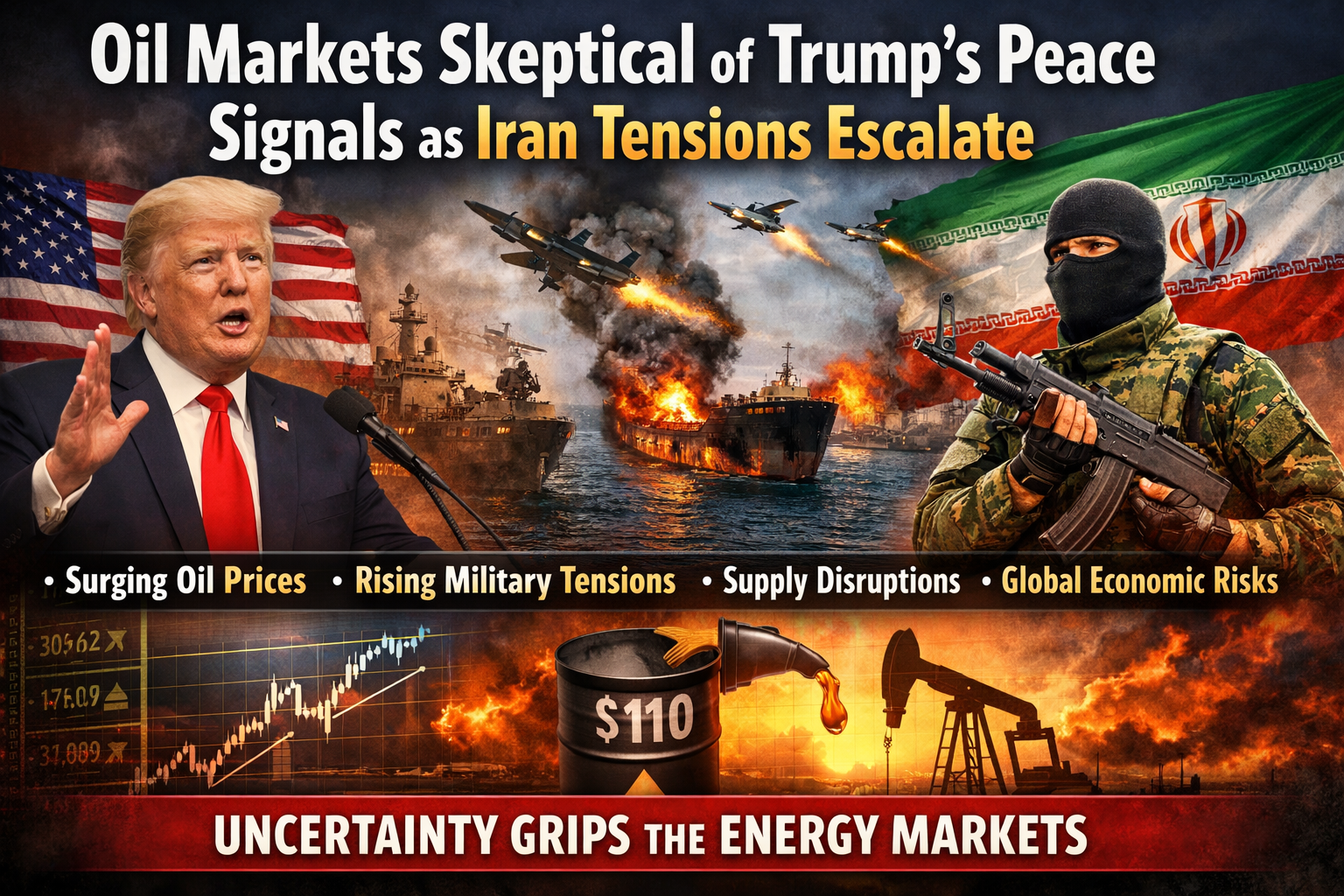
Global oil markets are showing growing skepticism toward U.S. President Donald Trump’s claims of potential peace with Iran, as escalating military tensions continue to disrupt energy supplies and fuel uncertainty worldwide.
Despite repeated signals from Trump suggesting that negotiations with Iran are progressing, markets remain unconvinced. Investors are reacting more strongly to developments on the ground—where conflict, threats, and supply disruptions continue to intensify.
Mixed Messages Create Market Uncertainty
Trump has recently indicated that diplomatic talks with Iran are underway and even suggested that a resolution could be near. However, these statements have been accompanied by aggressive warnings, including threats of severe military strikes if Iran fails to comply with U.S. demands.
This contradiction—talks of peace alongside threats of escalation—has left oil traders uncertain about the true direction of the conflict. As a result, markets are pricing in risk rather than optimism.
Oil Prices Surge Amid Supply Fears
Oil prices have risen sharply as fears grow over supply disruptions in the Middle East. Brent crude has crossed $110 per barrel, reflecting concerns about reduced output and blocked trade routes.
A key factor is the ongoing disruption in the Strait of Hormuz, one of the world’s most critical oil transit routes. Any prolonged closure or instability in this region threatens nearly 20% of global oil supply, making markets highly sensitive to geopolitical developments.
Conflict Overshadows Diplomacy
While the U.S. signals openness to negotiations, Iran has responded with defiance, warning of further escalation and continuing attacks on energy infrastructure across the region.
Recent strikes, drone attacks, and threats targeting oil facilities in Gulf countries have intensified fears of a wider regional conflict. These developments are reinforcing the perception that the situation is far from stabilizing.
Global Economic Risks Rising
The ongoing conflict is not only affecting oil prices but also raising broader economic concerns. Analysts warn that sustained disruptions could lead to higher inflation, increased fuel costs, and slower global growth.
Markets are particularly sensitive because energy prices directly impact transportation, manufacturing, and food supply chains worldwide.
Markets Trust Actions Over Words
Ultimately, oil markets are responding less to political statements and more to real-world risks. As long as military actions, supply disruptions, and geopolitical tensions persist, investor confidence in any peace signals is likely to remain low.
Until there is clear, verifiable progress toward de-escalation, volatility in oil prices is expected to continue.